
[Issue# 004] How can three Days Beat Three Years?
Hey, it’s Mark.
I just got back from three days in the mountains of Washington, and I need to tell you what happened out there, because it taught me something I thought I already knew.
In the last letter I told you I'd decided to spend this year traveling as far as I have to in order to get inside the six-foot circle of the people who showed up for me when it counted. This trip was one of those. I flew 2,500 miles to say thank you to my friend Tal ... a man who stood beside me during some of the hardest days I've written to you about. Somebody I can actually talk to.
But there was a second reason for the timing. Tal's son Noam is leaving in a couple of weeks. He's heading overseas to spend a year at an academy, training, and before making important life’s decisions. Which meant this was the last window we had. Not a good time to go. The last time to go.
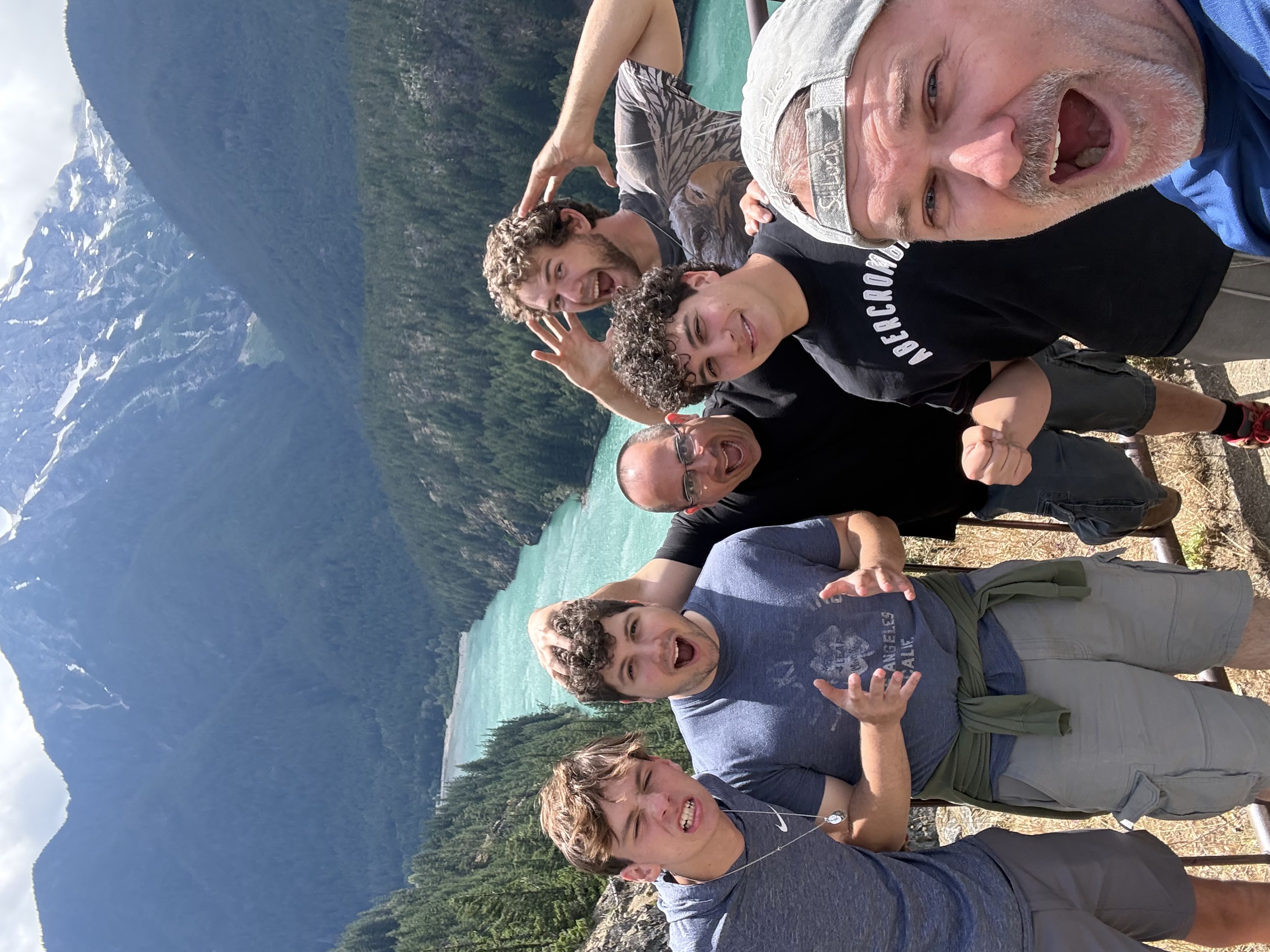
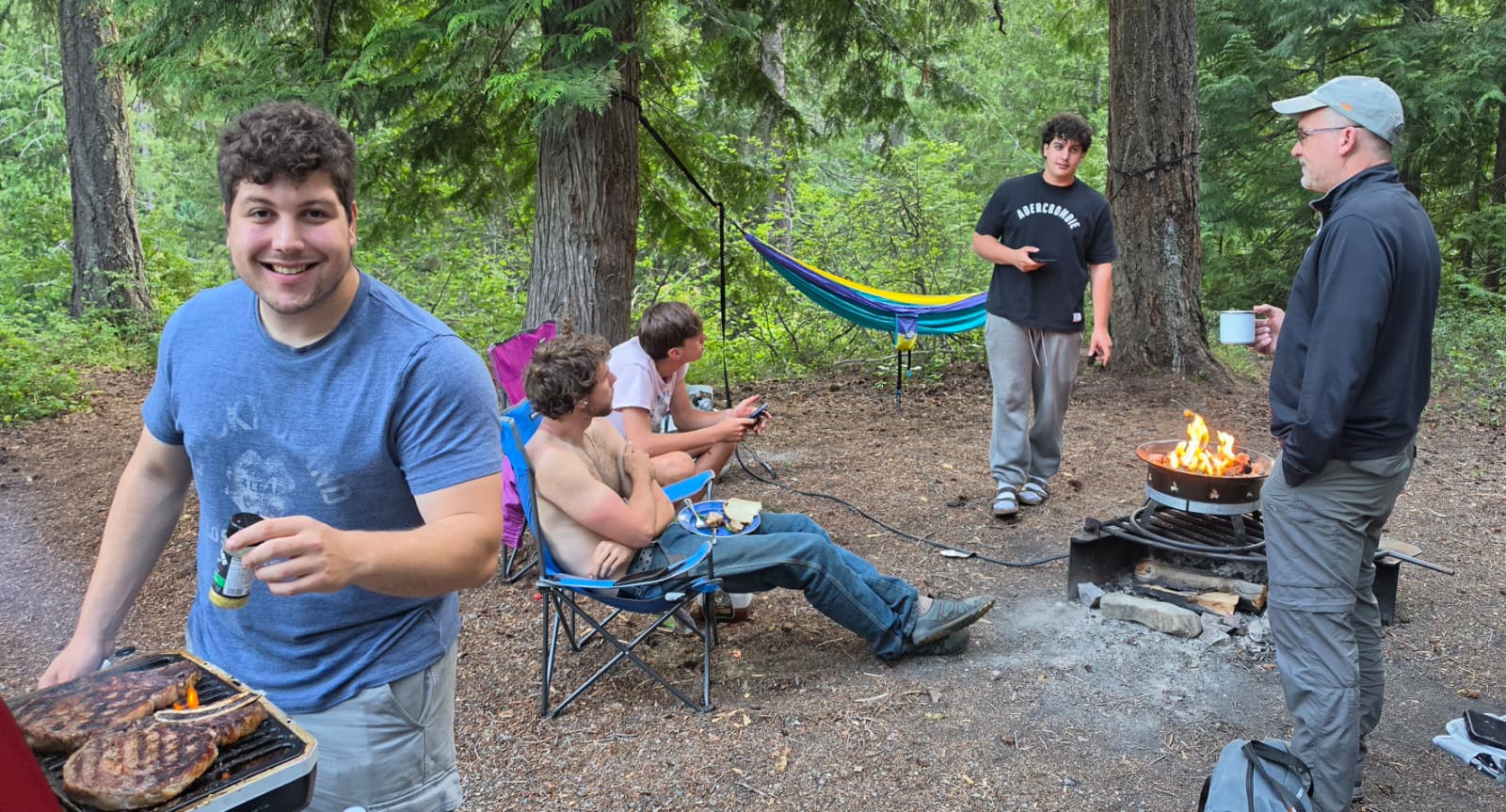
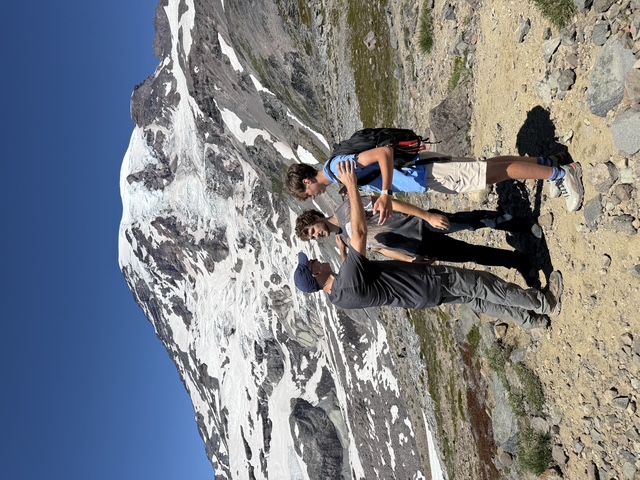
So I brought my son Markus and my godson Adam, and the five of us spent three days hiking, camping, and driving through the Cascades.
The conversation I couldn't have scheduled.
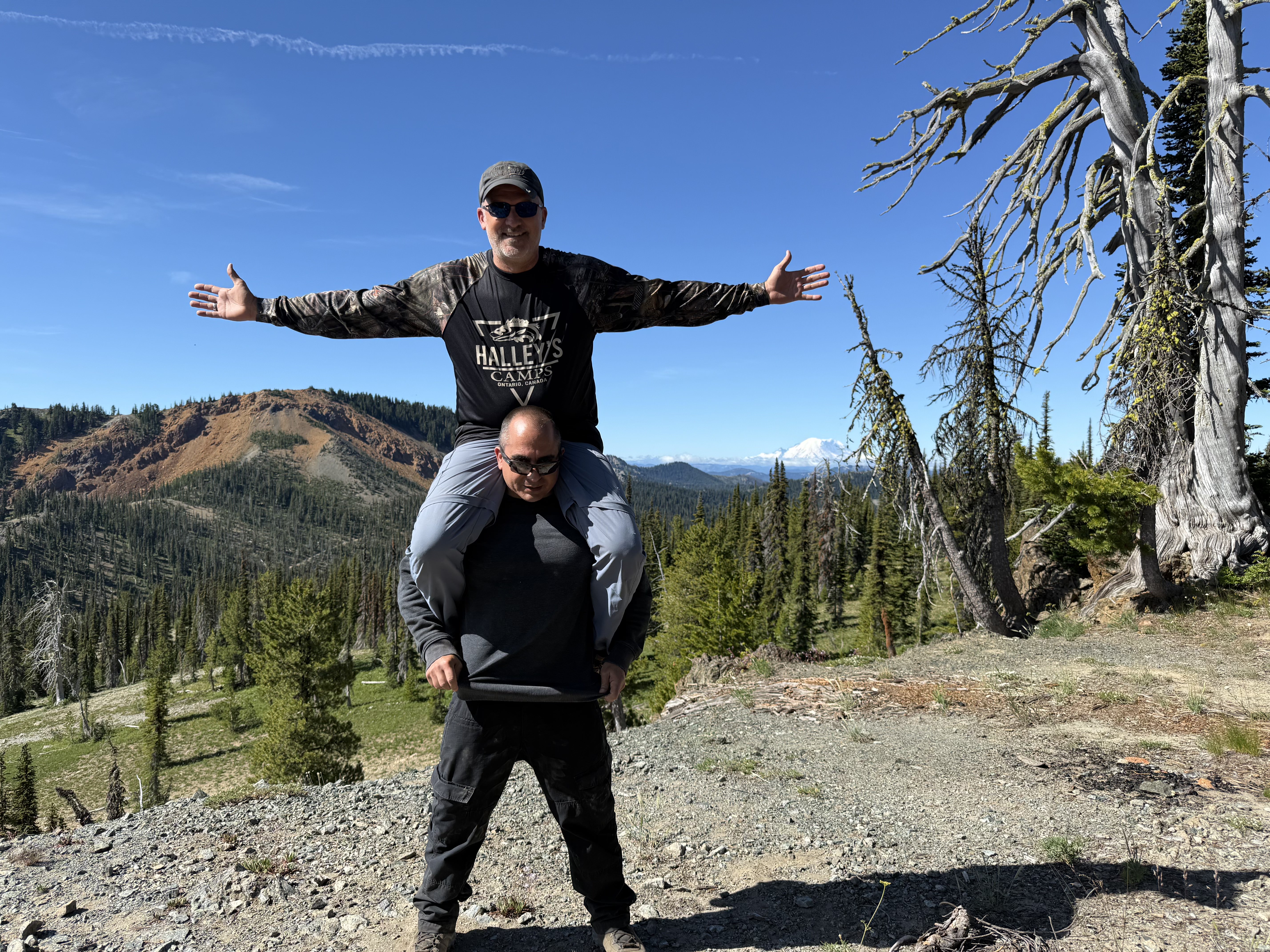
On the hike back down from Mount Rainier, Markus started talking. Really talking. About a decision he's working through, something that actually matters to him.
Now Markus is 28. He runs a real estate business. I run mine. We talk. But here's what I have to keep relearning: I cannot manufacture that conversation. I can't snap my fingers on a Tuesday and have my grown son open up about the thing he's wrestling with.
Sometimes you have to be eight thousand feet up a mountain with no cell service before it happens.
Tal noticed it. He and Adam hung back and gave us space, and later he said to me, "I bet you two have conversations like that all the time."
We don't. That's the thing. We'd actually touched on that same topic before, on the surface, more than once. What was different up there wasn't the topic. It was that his phone didn't work, my phone didn't work, and for the first time in a long time we were both completely present.
Then a teenager explained my own book to me.
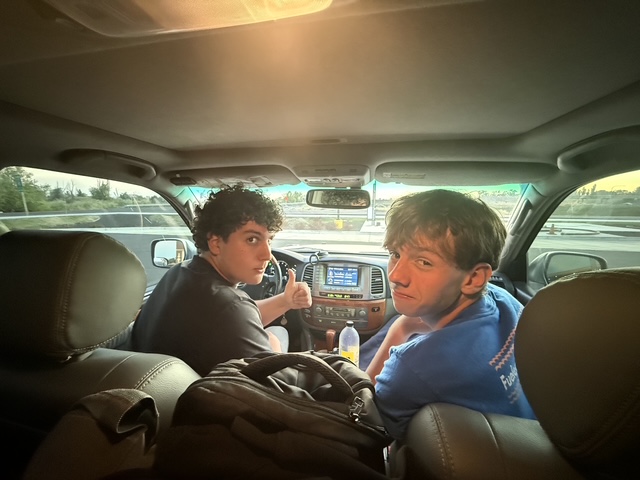
We had a long way to drive out there, and the seating kept shuffling. At one point I was at the wheel with Tal's son Eton next to me, and somewhere along that road he asked what I was excited about right now.
So I told him about the book I'm writing, Contagious Proximity, and about this newsletter. And Eton started asking questions. Real ones. Here's what I explained to him: six years ago the entire world learned that to be contagious to someone, you have to be within about six feet of them. That's the proximity circle
And it turns out the things worth catching travel exactly the same way. If you want to have a meaningful impact on someone, you have to be in proximity to them. And if you want to be impacted by someone, same thing. It runs both directions.
That's the opposite of everything we've been told about staying close to people.
It was never about more contact. It's about less distance.
While we were still talking about it, he pulled out his phone and signed himself up for this newsletter. Nobody asked him to. A seventeen-year-old, mid-conversation, deciding he wanted more of it. I have not stopped smiling about that.
Then Noam took the wheel.
Later in the trip the cars shuffled again, and this time Noam was driving and I was his passenger. Noam is Tal's other son. He's the one leaving overseas in two weeks.
We hadn't been on the road five minutes before he started asking me questions. Not small talk but real questions, one after another.
I asked him later why. And what he told me I have not been able to shake. He said he'd been watching me for three days, and that I talked differently, listened differently, responded differently than the adults he's around. He said most of his friends' parents aren't especially self-aware, and that he can't have conversations like this with them.
So he got in the driver's seat, put me in the passenger seat, and interviewed me for an hour.
Understand what actually happened there. I did not teach that kid about proximity in that car. He ran it on me. He got close, he paid attention, he noticed something worth asking about, and then he made the time and asked. He did the whole thing without ever hearing the word.
And then he told me a story that proved my own thesis better than anything I have written.
A man named Yohanan came to visit their family. He sat with Noam and spoke Hebrew with him, because Noam needed the practice. And in that conversation Yohanan asked why he wasn't part of the Jewish youth group. Noam said he'd tried it, hadn't liked it, and hadn't gone back.
Yohanan kept at him. Told him to give it another try. Said he'd meet new people, make new friends, and that he thought it would change his life.
So Noam went back. And that group became the deciding factor in one of the biggest decisions of his young life.
His words: "That was just from two days of being with them."
And then Noam said the thing that REALLY resonated with me. He said if Yohanan had tried to tell him all that over the phone, he would have said "okay, sure, I'll give it a try" ... and never done it.
Same words. Same man. Same advice. Over the phone it changes nothing. Six feet away it changes a life.
I asked Noam why he thinks his generation gets called the loneliest one on record, when they're connected to more people than any generation in history.
He didn't hesitate. He said everyone's addicted to their phones. That when you look at social media and see what everybody else is doing, you feel bad that you're not doing it, but you don't want to do anything about it. So people end up depressed and lonely, staring at other people's lives instead of looking at their own.
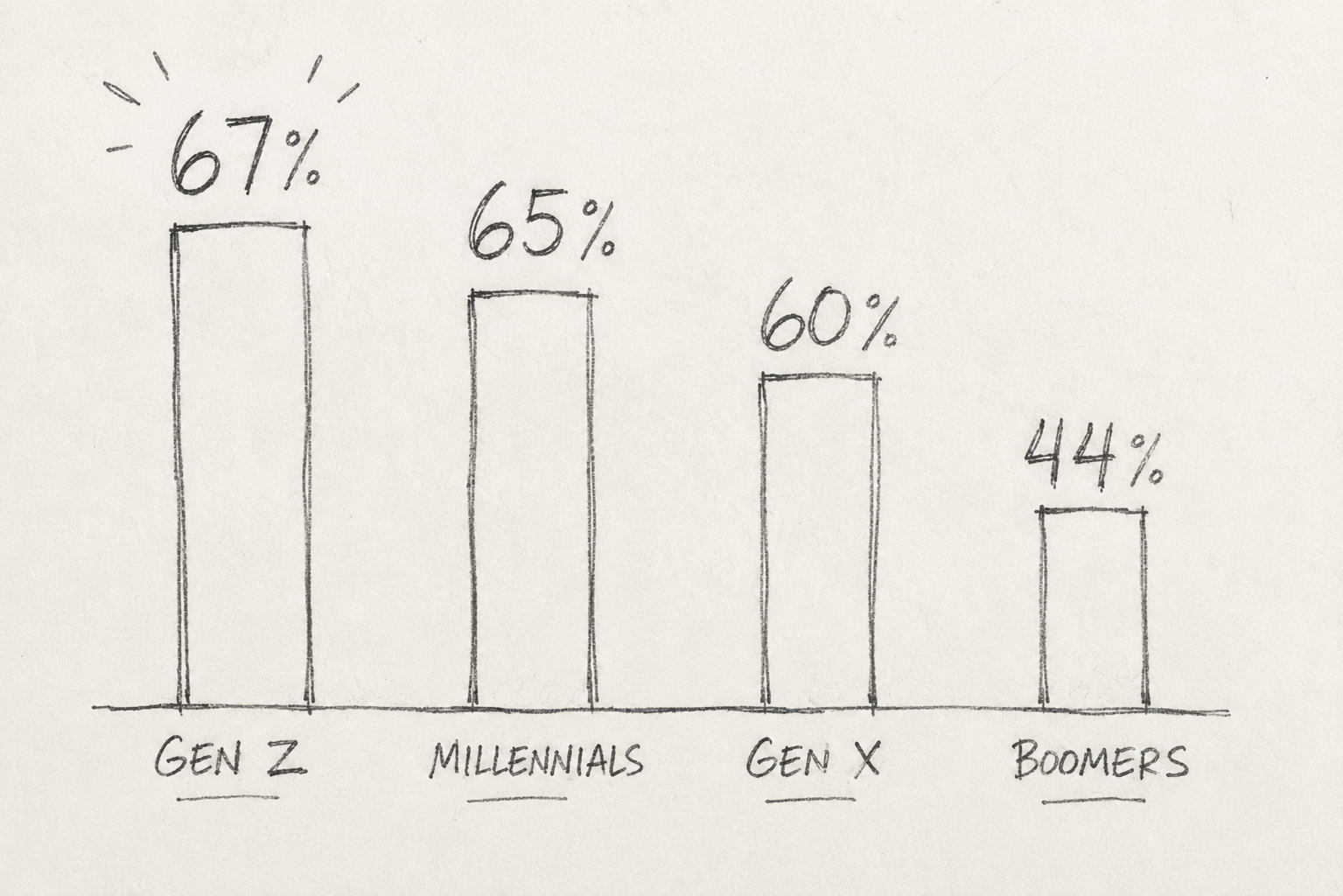
Turns out he's right, and it's not close. Cigna's 2025 Loneliness in America report found 67% of Gen Z now register as lonely, the highest of any generation measured. Millennials came in at 65%. Gen X at 60%. Baby boomers, the generation everyone assumes is the lonely one, came in lowest at 44%.
Source: The Cigna Group, Loneliness in America 2025
Then he said: “social media isn't real, and they think it is”.
And then he said the line I can't stop thinking about. He said we've lost the ability to communicate face to face, because we're so used to communicating through a phone. And now we're afraid of it.
Afraid of face-to-face. Which means afraid of getting close enough for anything to actually pass between us.
I told them what I've told a lot of families:
Proximity isn't just being there. It's being present while you're there.
I had assumed this message was for my generation. Maybe millennials. I was wrong. These were Gen Z and Alpha kids, and they understood it faster than most executives I know.
Because they're living inside the problem.
Borrowed trust, and earned trust.
There's something else in this I keep turning over.
Noam did not open up to me because I'm impressive. He opened up because he loves his father, and his father brought me into his life. I showed up with trust I had not earned yet ... it was transferred to me, on loan, because Tal vouched for me by keeping me close.
But borrowed trust only gets you in the car. It does not keep you there. The rest of it I had to earn over three days of actually being present with those boys ... on trails, around a fire, in a truck. And once I earned it, they wanted more of it.
Proximity is inherited first, and earned second. Somebody has to open the door.
After that, it's on you.
Which means the way you get close to people you could never reach on your own is almost always through someone who already loves them. And the way you stay there is by being worth the introduction.
And then my son called me out.
Now here's the part I could have left out of this letter, and won't.
In the middle of all this, Markus turned it around on me. He said that I do this thing ... that his sister Mary and I both do it ... where we think we're pretty good at holding a conversation while we're distracted with something else.
He said, and I'm quoting him:"Sometimes you are. But we can tell."
He explained that when he reaches out and gets two or three flat answers, or a reply sixty seconds late, he's done. He'll move on. And then he won't be in a talking mood for another hour. Maybe not tomorrow. Maybe not next week.
And then my 28-year-old son gave me the best piece of proximity advice I have heard from anyone, including myself:
A layup.
That's exactly what it is. Connection almost never announces itself. It doesn't get scheduled. It shows up as an easy shot that somebody quietly passes you ... a question out of nowhere, a comment in the car, a silence they leave open on purpose. And you either catch it or you don't.
I said "guilty" out loud when he said it. Because I am.
And I want to be clear about something, because I think it matters more than anything else in this letter. That moment was not a low point of my trip. It was the whole point of it.
I got called out by my own son, using the exact principle I have spent my life teaching him. That is not a failure of parenting. That is the return on proximity. You spend years pouring into someone, and if you've done it right, one day they have the standing to turn around and hold you to it.
It's a gift to have a son call you out. It's a bigger gift when he holds you accountable to the lessons you taught him.
One more thing the boys noticed.
Later, Eton and Noam started talking about their dad. They said Tal never picks up the phone for friends when he's in a meeting. Never.
But for family, he always answers. Every time. "What's up? Is everything okay? Is it an emergency?" Even when it's his own father butt-dialing him from a nap and all he can hear is snoring.
They laughed about it. But listen to what they were actually telling me: they had noticed. They knew exactly where they ranked. Their father had built a practice so consistent that his kids could describe it back to me on a mountain road.
That's a legacy. Nobody had to explain it to them. They caught it.
A poem bolted to a mountain.
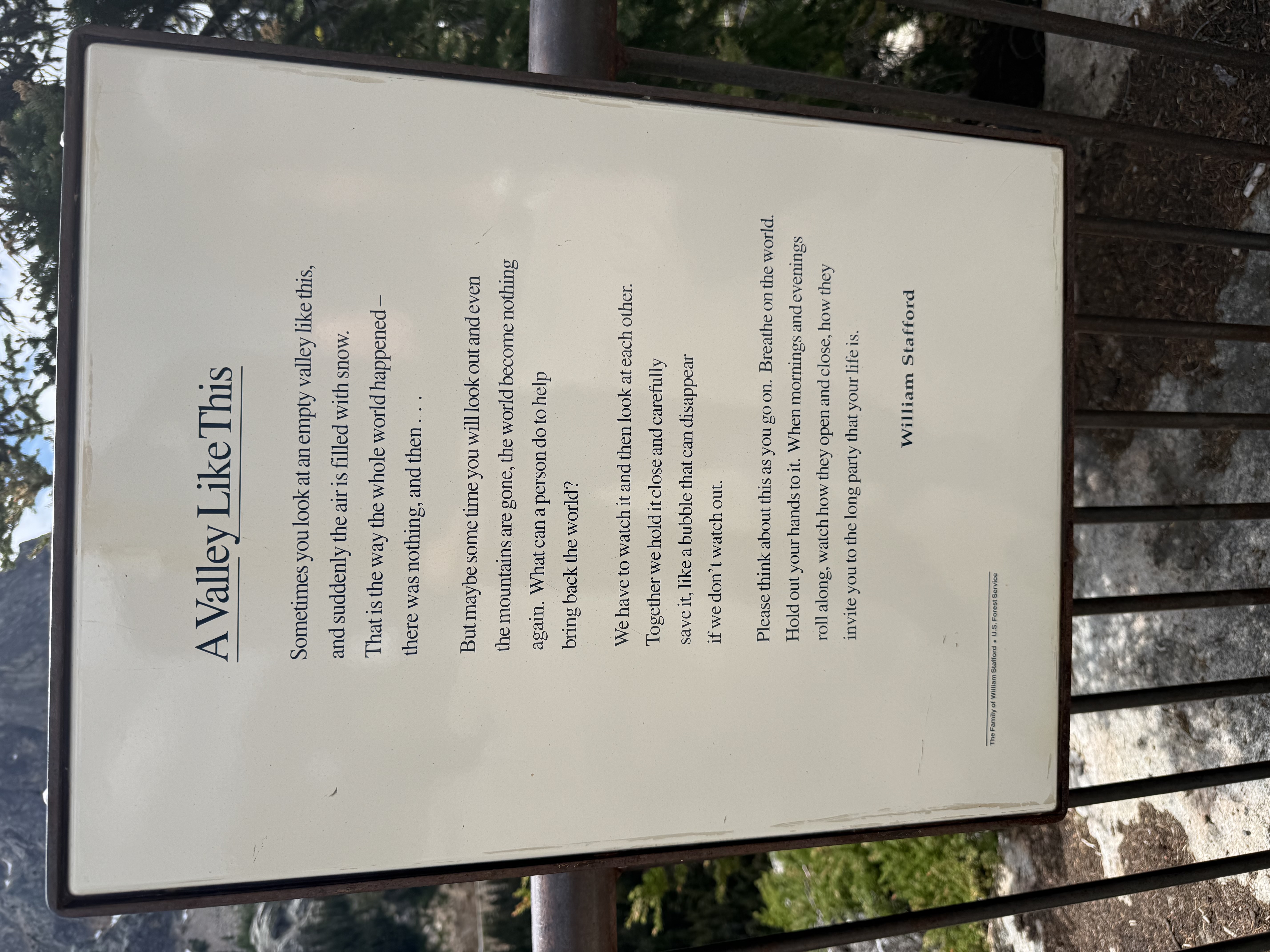
On one of those trails there are poems bolted to the railings. I stopped at one by William Stafford called "A Valley Like This."
It asks what a person is supposed to do when it feels like the whole world has gone to nothing. And his answer stopped me, because it wasn't "go fix it." It was something closer to: watch it, and then look at each other. Hold it close, together, carefully ... because it's as fragile as a bubble, and it disappears if nobody's watching out for it.
A man wrote that decades ago and somebody bolted it to a mountain. And I read it on a trip I took because I finally decided to go say thank you to a friend's face instead of sending another text.
The connection we've lost is exactly that. A bubble that disappeared because we stopped watching out for it.
(Look the poem up when you have a quiet minute. I won't reprint it here ... it's his, not mine. But it's worth the three minutes.)
Three days versus three years.
Here's what I keep coming back to.
Tal and I talk on the phone here and there. We're good about it. But in three days on those mountains, we got more real connection than we would have gotten in the next three years of calls and texts. Not a little more. Not incrementally more. Categorically more.
Three days beat three years. That is not a small thing to notice.
And every bit of it happened because five people got in a car and a tent and on a trail together, where the phones didn't work and nobody could hide.
So; a question, and a favor.
Who has been passing you layups lately that you haven't caught? Somebody in your life is giving you the easy shot. A text that says nothing in particular. A kid who wanders into the room and doesn't say why. A friend who calls and then talks about the weather. Sit with that for a second before you keep reading.
Here's the favor, and it's the only thing I'm actually asking. I've been sitting with something for a while, and I would rather ask you than guess.
I keep thinking about doing more of this ... getting people into actual proximity, on purpose. Not a webinar. Not a call. Something real. And I don't yet know what shape it should take. So if you had someone genuinely in your corner, or a small group of people carrying the same weight you carry, what would you actually want it to look like? A voice on the phone when you're stuck? A few days a year in a room with people who get it? Something else entirely?
Hit reply and tell me. I'm not selling anything. I'm truly just trying to build the right thing instead of the thing I assume you need. And I read every single one.
It's good to be back.
Mark
P.S. Noam leaves for overseas soon. I keep thinking about the fact that a kid with that on his calendar spent an hour of his last few weeks at home asking an old friend of his father's about how to be close to people. I don't think that's an accident. I think that's exactly what you go looking for when the clock is running. And Markus, if you're reading this ... you were right, and I'm working on it. Consider this me catching the layup


